Hair Toppers vs Hair Extensions: Which Is Right for Your Clients?
Hair Toppers vs Hair Extensions:
Which Is Right for Your Clients?
Two products. Two completely different problems they solve. If you are a salon owner, stylist, or wholesale buyer stocking hair solutions for clients with fine or thinning hair — understanding the difference between hair toppers and extensions is not optional. Getting it wrong means the wrong product, an unhappy client, and a lost sale.
1. What Is a Hair Topper?
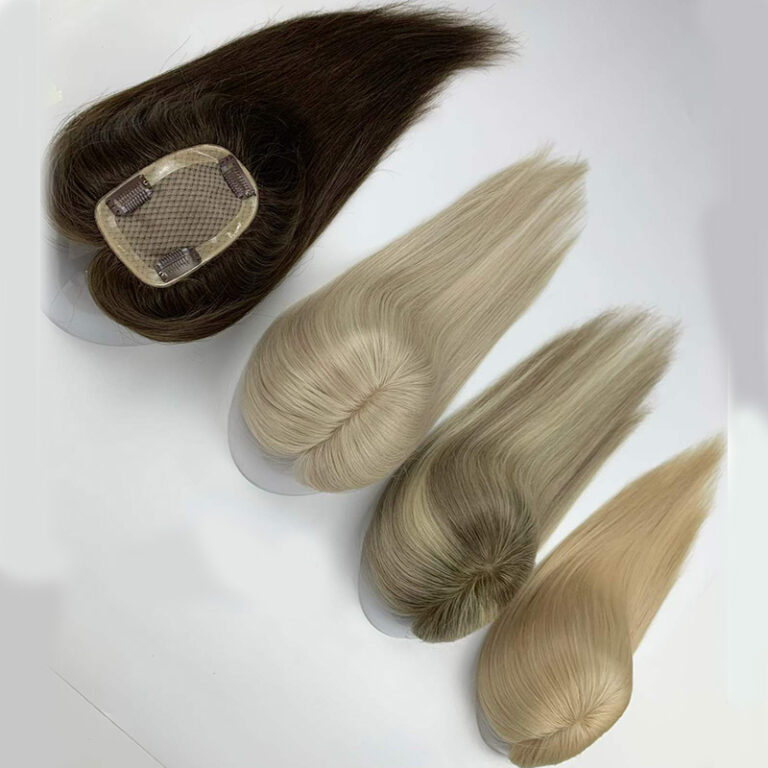
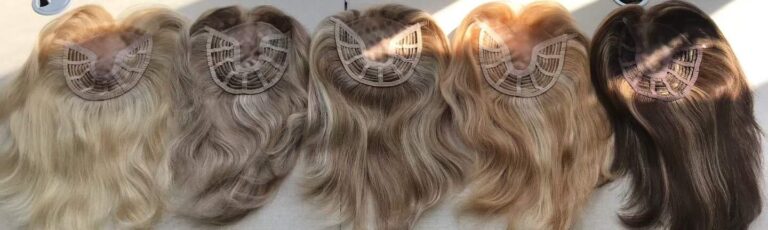
A hair topper — also called a wiglet, a crown piece, or a hairpiece — is a partial hairpiece designed to cover a specific area of the scalp where hair is thinning or missing. It attaches using small pressure clips that grip the existing hair around the perimeter of the coverage area.
Toppers are engineered for one primary purpose: to address hair loss. They come in different base sizes — small, medium, and large — depending on how much of the scalp needs coverage. The base is typically made from lace, monofilament, or a silk top panel, and individual hairs are either hand-tied or machine-sewn onto that base.
Designed for thinning hair
Covers the crown, parting line, or hairline. Blends with the wearer’s own hair around the sides and back.
- Base sizes: typically 5×5cm to 18×18cm
- Attachment: pressure clips
- Coverage: top of scalp only
- Ideal for: thinning crown, alopecia, postpartum loss
- Natural hair required: Yes — around the edges
Designed for length & volume
Added to existing healthy hair throughout the head. Does not cover the scalp — sits beneath the wearer’s own hair.
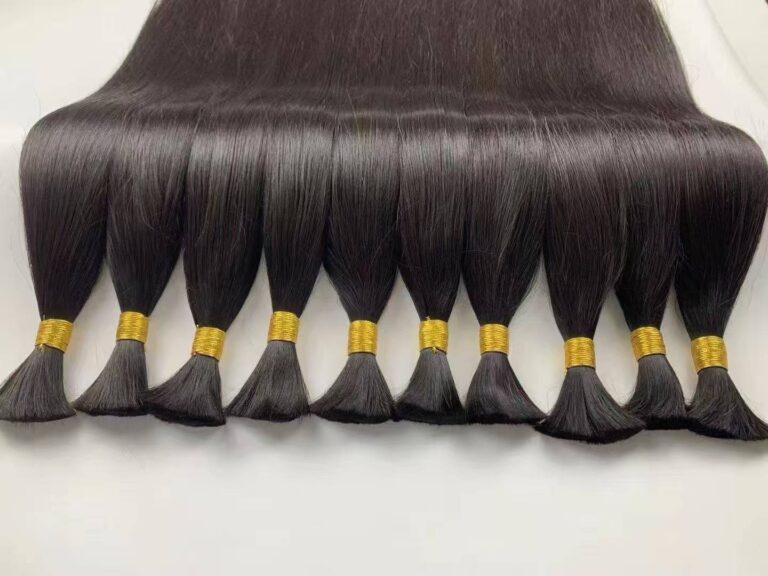
- Types: clip-in, tape-in, sew-in, fusion, halo
- Attachment: clips, tape, thread, bonds
- Coverage: full head, underneath layers
- Ideal for: adding length, thickness, colour variation
- Natural hair required: Yes — must be healthy enough to anchor
2. What Are Hair Extensions?
Hair extensions are strands or wefts of hair — human hair or synthetic — attached to the client’s existing hair to increase length, volume, or both. Unlike a topper, they do not sit on top of the scalp or cover any particular area. They are integrated throughout the hair, hidden beneath the client’s own layers.
Human hair extensions can be washed, heat-styled, and coloured just like natural hair. They are available in a wide range of attachment methods — from temporary clip-in wefts that a client removes each night, to semi-permanent tape-in or sew-in extensions that a stylist applies and removes in salon.
“Extensions require healthy, existing hair to anchor to. This is why they are not a solution for significant hair loss — they cannot be applied to areas where the hair is already too fine or too sparse to support the weight.”
3. The Core Difference — One Fact That Changes Everything
Hair toppers are designed for women experiencing thinning or hair loss at the crown or hairline. They cover the scalp directly and blend with the wearer’s remaining natural hair at the sides and back.
Hair extensions are designed for women with healthy, existing hair who want to add length, volume, or colour variety. They do not cover the scalp and are not a solution for hair loss.
The two products solve fundamentally different problems and are rarely interchangeable. Recommending extensions to a client with significant thinning will deliver a poor result. Recommending a topper to a client with healthy hair who simply wants length is equally inappropriate.
This distinction is the single most important thing a stylist or salon buyer needs to understand before stocking either product. The client consultation question that determines everything is simple: Is the client losing hair, or does she simply want more of it?
If the answer is losing hair — the client needs a hair topper. If the answer is wants more — the client is a candidate for hair extensions.
4. Side-by-Side Comparison
The table below covers every practical dimension a salon buyer or distributor needs to evaluate before stocking either product.
| Dimension | Hair Toppers | Hair Extensions |
|---|---|---|
| Primary purpose | Cover thinning or hair loss at the crown / parting | Add length, volume, or colour variation |
| Placement | Top of scalp — clips onto existing hair around the perimeter | Throughout the head — hidden under the client’s own hair |
| Scalp coverage | Yes — base sits directly on scalp | No — does not touch the scalp in most methods |
| Attachment method | Pressure clips (removable by client at home) | Clips / tape / sew-in / bonds / halo depending on type |
| Required existing hair | Minimal — only enough around edges to clip onto | Substantial — must be healthy enough to anchor and support weight |
| Suitable for hair loss | Yes — specifically designed for this | No — not suitable for significant thinning or bald patches |
| Suitable for healthy hair | Yes, but unnecessary if no thinning present | Yes — ideal use case |
| Base materials (human hair) | Lace, monofilament, silk top, PU skin | Machine weft, hand-tied weft, tape weft |
| Can be coloured | Yes (human hair only) | Yes (human hair only) |
| Can be heat-styled | Yes (human hair only) | Yes (human hair only) |
| Typical wear duration | Removed daily or as needed — reusable | 6–12 weeks (salon methods) / daily removal (clip-in) |
| Salon skill required | Low — client can self-apply after brief instruction | Medium to high for tape-in, sew-in, fusion methods |
| Client profile | Women with thinning hair, alopecia, postpartum loss, medical hair loss | Women with healthy hair wanting more length, volume, or colour |
| Wholesale opportunity | Recurring — clients return regularly for replacement or new styles | Recurring — clients return for maintenance every 6–12 weeks |
5. Which Client Needs Which Product?
The fastest way to identify the right product is to ask one question during consultation: where is the client’s hair concern located, and what is causing it?
Recommend a Hair Topper when…
- The client notices thinning at the crown or parting
- She can see scalp through her hair in certain lighting
- She has experienced postpartum hair loss
- She is going through menopause-related hair thinning
- She has a diagnosed condition such as androgenetic alopecia
- She has had chemotherapy and has partial regrowth
- She wants something she can apply and remove herself
- Her hair is healthy at the sides and back but thin on top
Recommend Hair Extensions when…
- The client has healthy hair with no significant thinning
- She wants to grow out a short cut without waiting
- She wants more volume throughout the length
- She wants to add colour or highlights without chemical processing
- She needs length for a specific event or occasion
- Her hair density is sufficient to support extension weight
- She is comfortable with regular salon maintenance appointments
- Do not recommend extensions to a client with active hair thinning. The additional weight placed on already weakened follicles can accelerate breakage and loss — making the original problem worse and damaging the salon’s reputation.
- Do not recommend a topper to a client with healthy, thick hair who simply wants more length. It will be unnecessary, harder to blend, and more expensive than the correct solution.
6. Can a Client Use Both at the Same Time?
Yes — and this is more common than many stylists expect. A client may have thinning at the crown but healthy, thick hair at the sides and back that she also wants to lengthen. In this case, a topper covers the scalp at the top, and clip-in or tape-in extensions add length in the lower sections of the hair.
For this combination to work well, the following conditions need to be met:
- The topper and extensions must be colour-matched from the same source — ideally the same manufacturer and dye lot
- The topper is placed first, then extensions are added in the lower sections only — never directly beneath the topper base where the scalp is already covered
- Both products should use the same hair grade (remy or virgin) to ensure matching texture and behaviour when heat-styled
- The client must be comfortable managing both pieces during daily wear and removal
For wholesale buyers, this is an important consideration: stocking matched topper and extension sets in coordinated colours increases your average order value and gives clients a complete, cohesive solution.
7. Why B2B Buyers Stock Both Product Lines
From a business perspective, toppers and extensions serve two overlapping but distinct client segments — and both represent recurring revenue.
Hair topper clients tend to be managing an ongoing condition. They return regularly for replacement units in new lengths or shades, and advice as their hair loss progresses or improves. A salon or distribution business that serves this client well builds a deeply loyal, long-term customer relationship.
Extension clients return on a service cycle — every 6 to 12 weeks for reinstallation, removal, or top-up. Their purchase behaviour is predictable, and the product volumes required are higher per appointment than for toppers.
“A salon that stocks only extensions is leaving the hair loss market entirely unserved. A salon that stocks only toppers is leaving the styling and length market unserved. The strongest product mix covers both — and a supplier who can provide both at consistent quality is more valuable than two separate suppliers.”
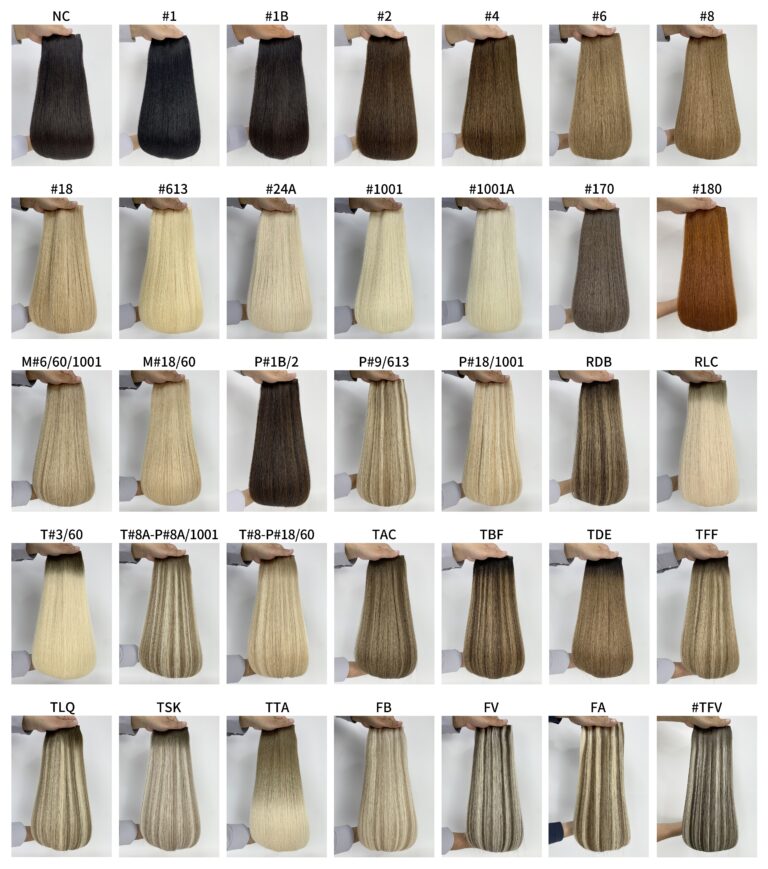
For distributors and wholesale buyers, sourcing both product lines from a single manufacturer also reduces logistics complexity and ensures colour consistency across the range — a significant advantage when clients use both products simultaneously. You can browse Tenchee’s human hair toppers and human hair extensions to see available specifications and colour options.
8. What to Look for in a Wholesale Supplier
Whether you are sourcing hair toppers, extensions, or both, the criteria for evaluating a wholesale supplier remain consistent. Based on the needs of professional salon buyers and distributors, these are the factors that matter most:
- Human hair only — verify that the supplier does not mix synthetic fibres into human hair products without disclosure
- Remy construction — all cuticles aligned in one direction; this prevents tangling and is the baseline for professional-grade product
- Colour consistency — critical if you are matching toppers and extensions for the same client; the supplier must maintain consistent dye lots across product types
- Factory transparency — a supplier who can show you the manufacturing process, raw material sourcing, and quality inspection steps is significantly lower risk than one who cannot
- Custom capability — the ability to produce in specific lengths, densities, base sizes, and colours to your specification; this matters as your business grows and client requirements become more specific
- Sample policy — any serious wholesale supplier should offer samples before you commit to a bulk order; if samples are not available, that is a risk signal
- Lead time reliability — a supplier whose lead time varies significantly between orders will eventually create a stock-out situation at the worst possible moment
At Tenchee, we manufacture and supply both human hair toppers and human hair extensions for salons, distributors, and private label brands worldwide. All products use 100% human hair — remy and virgin grades available — with full factory transparency and custom order capability for buyers who require specific colour matching, base construction, or branded packaging.
Get Wholesale Pricing for Toppers & Extensions
We supply salons, distributors and hair brands worldwide with 100% human hair toppers and extensions. Request samples or a wholesale quote today.