How Custom Human Hair Wigs Are Made: A Guide for Salons & Hair Brands
If you run a salon, wig store, or growing hair brand, you may have asked:
How custom human hair wigs are made?
The answer starts long before the wig is finished.
A professional custom wig begins with a clear product specification. The hair type, base construction, color, density, length, and texture all affect the final product.
For salons and retailers in the Netherlands, New Zealand, Ireland, and other quality-focused markets, understanding how custom human hair wigs are made can help you choose the right manufacturing partner.
It can also help you avoid expensive mistakes.
At Tenchee, we manufacture custom human hair wigs and toppers for salons, distributors, and hair brands. Our process starts with your specifications and ends with a finished product ready for your brand.
How Custom Human Hair Wigs Are Made: Step 1 — Define the Product
The first step in understanding how custom human hair wigs are made is understanding the specification.
A custom wig is not simply a standard wig with a different color.
You can define:
- Base construction
- Lace type
- Hair grade
- Hair color
- Hair length
- Hair density
- Hair texture
- Curl pattern
- Packaging
- Private label requirements
This is why how custom human hair wigs are made depends heavily on the product specification.
For example, a salon may need a natural-looking lace front wig.
Another business may need a mono wig.
A medical hair business may need a PU or silicone-based construction.
Each construction affects the appearance, fit, production process, and price.
How Custom Human Hair Wigs Are Made: Step 2 — Choose the Hair
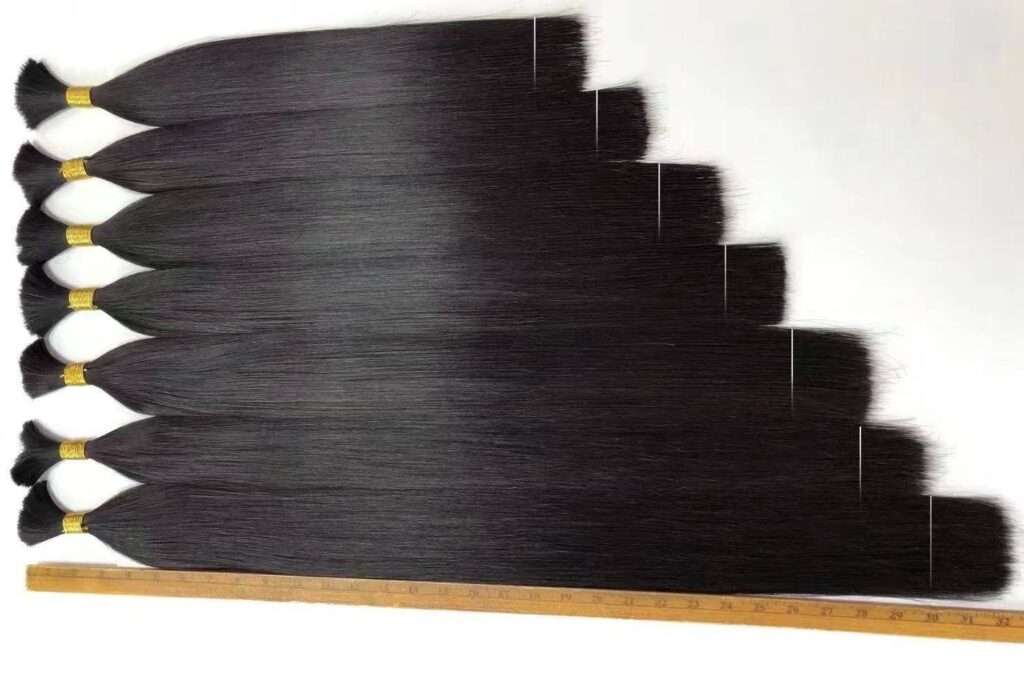
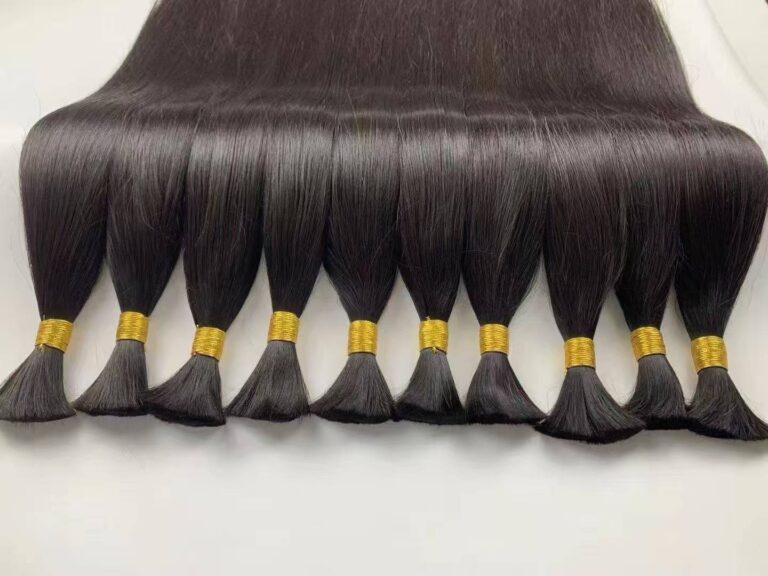
The next part of how custom human hair wigs are made is selecting the appropriate human hair grade.
Tenchee’s custom manufacturing page lists Remy Human Hair, Virgin Human Hair, and Raw Virgin Human Hair as available options.
Remy hair has cuticles aligned in the same direction.
Virgin hair is unprocessed hair.
Raw Virgin hair is supplied without chemical or mechanical treatment.
The right choice depends on your product positioning.
A premium retail brand may need a specific hair grade for its target customers.
A salon may need hair that can be styled or colored.
The important point is simple.
How custom human hair wigs are made starts with choosing the right hair for the finished product.
How Custom Human Hair Wigs Are Made: Step 3 — Select the Base
The base is one of the most important decisions in how custom human hair wigs are made.
Different constructions create different customer experiences.
For example:
Lace Base
Lace provides a lightweight construction and a natural-looking hairline.
Mono Base
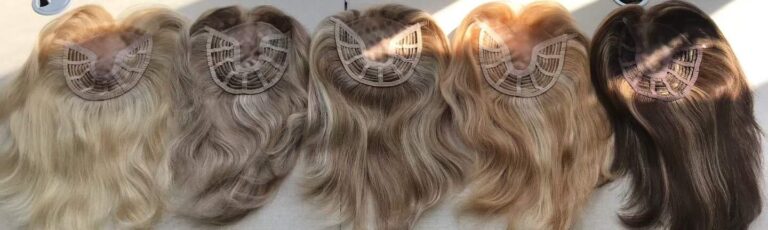
Monofilament construction can provide a realistic part while offering a durable structure.
Silk Base
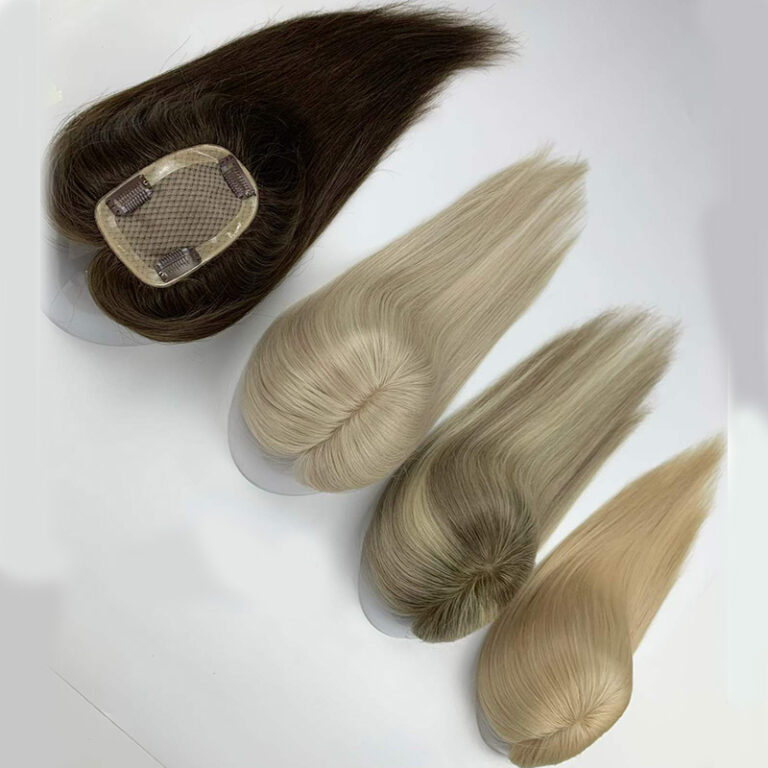
A silk panel can create a scalp-like appearance at the part.
PU or Skin Base
PU or skin construction can be used for adhesive or suction-based applications.
Silicone Cap
Silicone-based constructions can be developed for medical wig applications.
Your target customer should determine the construction.
A premium salon product does not necessarily need the same base as a medical wig.
That is an important part of how custom human hair wigs are made.
How Custom Human Hair Wigs Are Made: Step 4 — Choose Color, Density and Texture
After the base and hair grade are decided, the next stage of how custom human hair wigs are made is defining the visual specifications.
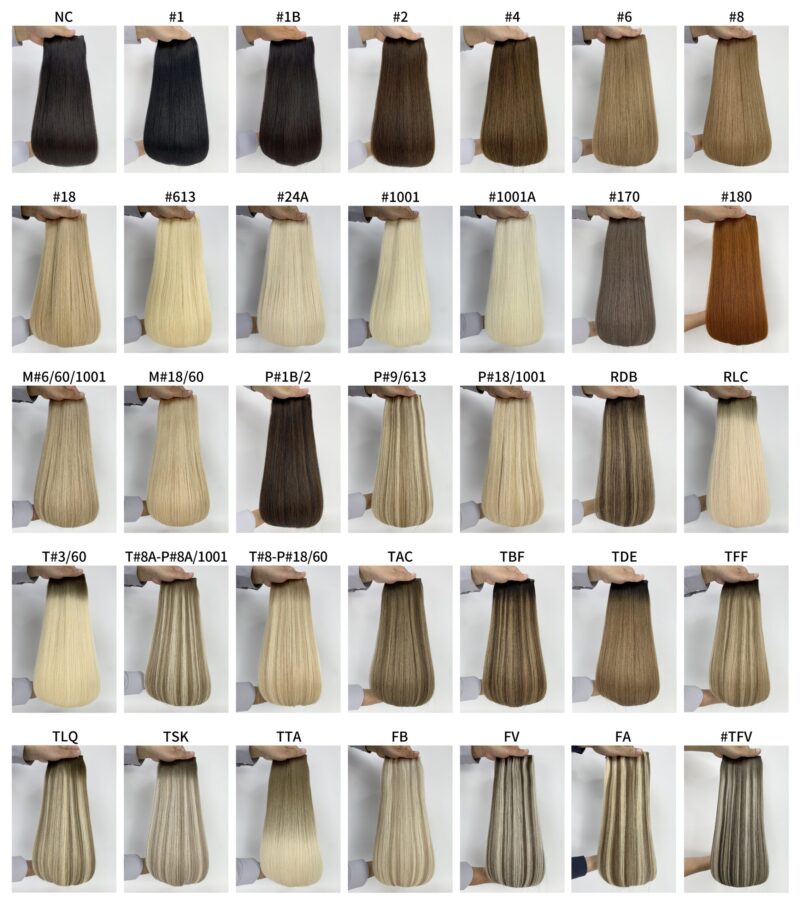
Color is especially important for a retail brand.
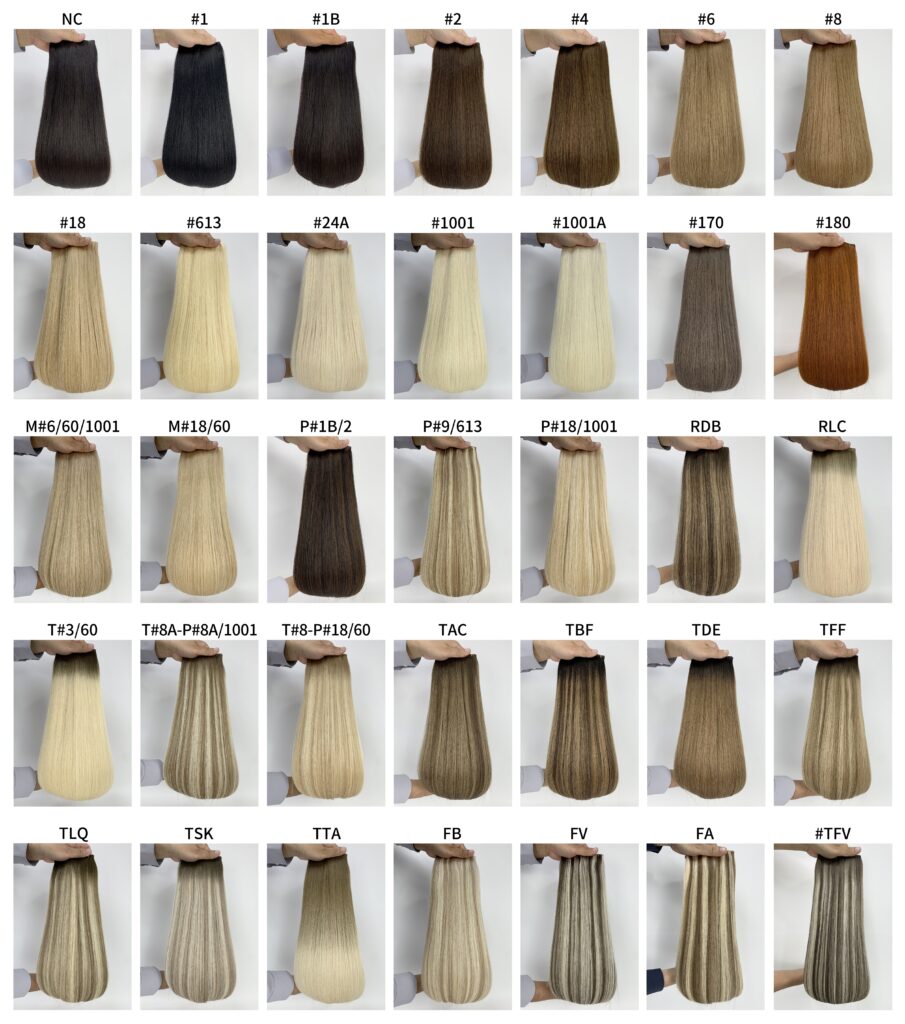
You can provide a physical color swatch or a Pantone reference for custom color matching.
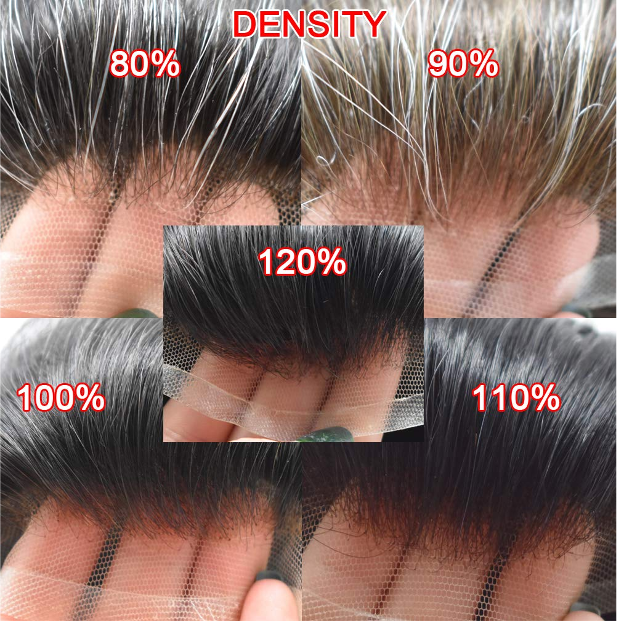
Density is also important.
Too much density can make a wig look unnatural.
Too little density may not provide the coverage your customer expects.
Texture is another key specification.
Straight hair, waves, and different curl patterns can create very different retail products.
For a brand selling to European customers, these details matter.
Your customers do not only buy human hair.
They buy the finished appearance.
That is why how custom human hair wigs are made must always be considered from the customer’s point of view.
How Custom Human Hair Wigs Are Made: Step 5 — Create a Sample
This is one of the most important stages of how custom human hair wigs are made.
Do not move directly from an idea to a large production order.
Start with a sample.
The manufacturer should confirm the specifications, feasibility, MOQ, and lead time.
The sample can then be evaluated before bulk production begins.
For a new salon or retail brand, this step is extremely valuable.
You can check:
- Hair quality
- Color
- Density
- Base construction
- Hairline appearance
- Texture
- Overall workmanship
If something is not right, you can adjust the specification before committing to a larger order.
That makes the sample stage a critical part of how custom human hair wigs are made.
How Custom Human Hair Wigs Are Made: Step 6 — Hand Ventilation
Once the sample is approved, production begins.
One important part of how custom human hair wigs are made is hair ventilation.
According to Tenchee’s manufacturing process, each unit is hand-ventilated onto the selected base or lace using human hair bundles.
This is a skilled production process.
The hair must be attached to the selected construction according to the product specification.
The result depends on the base, density, hair direction, and overall design.
For professional buyers, this is one reason why choosing the manufacturer matters.
You are not simply buying hair.
You are buying the finished construction.
How Custom Human Hair Wigs Are Made: Step 7 — Final Production
After the construction is completed, the unit is prepared according to the agreed specification.
This is where the original specification becomes the finished product.
Color.
Density.
Length.
Texture.
Base.
Hair grade.
Every detail should match the approved specification.
This is another reason why how custom human hair wigs are made is different from buying a standard catalog product.
With a custom order, the specification becomes the foundation of the production process.
How Custom Human Hair Wigs Are Made for Private Label Brands
For a new retail brand, how custom human hair wigs are made is only part of the question.
The other question is:
Can the manufacturer produce the wig under my brand?
Tenchee provides OEM and private label manufacturing services.
Custom labels, packaging, and care cards can be supported for private label projects.
This allows a salon or retail brand to develop its own product line instead of simply reselling another company’s catalog.
For a new brand in Ireland, New Zealand, or the Netherlands, this can be particularly useful when building a differentiated product range.
You can define the product first.
Then build the brand around it.
How Custom Human Hair Wigs Are Made: From Sample to Shipment
The overall process can be simplified into four stages:
1. Share Your Specification
Tell the manufacturer what you need.
2. Sample & Confirm
Review the sample and confirm the specifications.
3. Handcrafted Production
The approved design moves into production.
4. Global Delivery
The finished products are prepared for shipment. Tenchee’s current process supports express shipping and sea freight for bulk orders.
For custom projects, the exact production time depends on the specifications, quantity, and base complexity. Tenchee currently states that samples typically take 7–10 business days, while bulk and private label production typically takes 3–5 weeks.
What Should a Salon Ask Before Ordering Custom Wigs?
If you are researching how custom human hair wigs are made, do not only ask about the price.
Ask these questions:
What hair grade will be used?
What base construction will be used?
Can I approve a sample first?
Can you match my color?
Can you customize density and length?
Can you produce private label packaging?
What is the MOQ?
What is the production lead time?
These questions will tell you much more about the manufacturer than a low quotation.
Build Your Own Custom Human Hair Wig Line
Understanding how custom human hair wigs are made gives you more control over your product line.
You can choose the construction.
You can choose the hair grade.
You can define the color.
You can control the density.
You can develop your own packaging.
And you can build the product around your customers instead of adapting your business to a standard catalog.
For salons and wig retailers in the Netherlands, New Zealand, Ireland, the United States, Europe, and other quality-focused markets, this can be a practical way to develop a more differentiated human hair product line.
If you already know what you want, you do not need to start with a large order.
Start with a specification and a sample.
Tenchee supports custom human hair wigs, toppers, OEM, and private label production for professional B2B buyers.
Want to Develop Your Own Wig?
Send us your preferred base, hair grade, color, length, density, texture, quantity, and packaging requirements.
We can review your specification and confirm the available production options, MOQ, and quotation.